
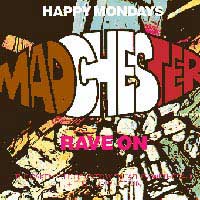
There are scenes, and then there are moments that actually change what music is allowed to be. Madchester was the second kind. In the late 1980s, a city that already had form for producing bands willing to break the rules quietly dismantled the wall between guitar culture and club culture, and the reverberations are still moving through British music now. If you want to understand how indie and dance stopped being enemies, you start in Manchester, you start at the Hacienda, and you start with the question of what happens when a generation of young musicians gets exposed to something they were never supposed to hear.
Manchester Was Already Primed to Blow
Before there was a Madchester scene, there was a Manchester attitude. The Smiths had spent the mid 1980s dominating the indie charts on the back of Morrissey's acerbic wordplay and Johnny Marr's intricate, chiming guitar work. Theirs was a very particular kind of Englishness, literary and mournful and brilliant. Then there was New Order, rising from the ruins of Joy Division, quietly doing something that nobody in British music had really attempted at scale: fusing post-punk with synthesisers and drum machines, treating the dancefloor as a destination rather than a compromise.
What both bands demonstrated was that Manchester acts were not interested in staying in their lane. That matters more than it might sound. When you have that kind of creative permission built into a city's musical DNA, when mixing genres does not feel like selling out, then the conditions for something genuinely new become possible. By the late 1980s, the city had a generation of young musicians who had grown up with these examples in front of them, and a nightlife that was about to change everything.
The Hacienda Changed the Terms
The Hacienda is the hinge point of this whole story. Owned partly by New Order and Factory Records, the club had opened in 1982 and spent years haemorrhaging money before it found its true purpose. By 1988, it had become ground zero for the acid house explosion in Britain, with DJs spinning the Chicago and Detroit records that were rewriting the rules of what a night out could feel like. [Acid house had been building its own momentum](/uprise/culture/acid-house-built-the-floor-were-still-dancing-on-it.) across British club culture, but the Hacienda gave it a home with specific geography, specific history, and a specific crowd.
That crowd included young people who had grown up loving guitars and who were now standing in a room where guitars were irrelevant. What happened next was not a planned crossover. It was organic, almost inevitable. Musicians started hearing rhythms and production approaches in clubs that made their existing ideas sound stiff and slow. They took those rhythms home with them. The wall between indie and dance did not come down in a meeting or a manifesto. It came down on a dancefloor at two in the morning.
What MDMA Actually Did to the Music
You cannot tell this story honestly without talking about Ecstasy. MDMA spread through club culture in the late 1980s with remarkable speed, and its effect was not simply on the people taking it but on the music being made in response to those crowds. Producers and musicians were watching audiences respond to rhythm and texture in ways that were new, and they adjusted accordingly. The drug's influence on the scene was profound and was widely acknowledged at the time, not in a hand-wringing moral panic way but as a simple observed fact about how music was shifting.
For guitar bands, this created a specific challenge and a specific opportunity. The challenge was that four-on-the-floor electronic music made a lot of indie rock sound nervy and uptight. The opportunity was that if you could loosen your rhythms, deepen your grooves, and think about how a track felt physically rather than just intellectually, you could make something that worked for both a record collection and a dancefloor. The bands who figured that out became the Madchester scene.
The Stone Roses and Happy Mondays: Same City, Different Planet
The Stone Roses released their debut album in 1989, and it landed like a signal from somewhere better. The record combined 1960s-influenced guitar pop with a looser, groovier feel that made clear these were musicians who had been listening to what was happening in clubs. Tracks like "I Wanna Be Adored" and "She Bangs the Drums" became anthems for a generation that had not really had their own until that point. The Spike Island concert in 1990, drawing around 27,000 people, became one of those events that everyone who was there remembers as defining, and that everyone who was not there wished they had attended.
Happy Mondays were a different proposition entirely. Where the Stone Roses were sleek and cool and slightly untouchable, the Mondays were messy, funky, and chaotic in the most exciting possible way. Shaun Ryder's slurred, surreal lyrics sat over beats that owed as much to disco and house as to anything in the rock tradition. "Step On" and "Kinky Afro" both reached the top five in 1990, which still feels improbable if you hear either track fresh. These were not polished crossover records. They were something stranger and more interesting than that.
Beyond the Big Two: The Scene That Surrounded Them
Madchester was more than two bands. Inspiral Carpets brought organ-driven indie with a psychedelic edge that made them feel like a slightly more linear point on the same map. The Charlatans combined Hammond organ sounds with dance rhythms in a way that pointed toward where indie would go next. 808 State represented the purely electronic side of Manchester's output, proof that the city was not just making guitar music with looser trousers but genuinely producing new electronic music of real quality. James, who had been active since the early 1980s, found the wider audience during this period that their earlier work had not quite delivered.
Factory Records sat behind much of this, though its story was more complicated than a simple success narrative. [The label's distinctive identity, forged from its earliest days](/uprise/culture/use-hearing-protection-factory-records-1978--79-box-set--), was built partly on Peter Saville's striking visual designs, which gave every release a coherent aesthetic even when the finances were disastrous. Factory's financial troubles were constant and eventually terminal, but while it was operating, it gave Manchester's output a visual and institutional identity that amplified everything the music was doing.
How It Ended and What It Left Behind
The Madchester moment collapsed fairly quickly. By 1992, the original energy had dissipated. Happy Mondays' recording sessions in Barbados became notorious for going badly wrong. The Stone Roses went into a long silence that lasted years before finally delivering their second album in December 1994, a record that divided critics and fans rather than uniting them the way the debut had. The Hacienda, struggling financially and increasingly beset by gang violence that had become impossible to manage, finally closed in June 1997. The golden period was brief.
But brief is not the same as insignificant. What Madchester left behind was a changed set of assumptions. It proved that guitar music and dance music were not in opposition, that they could combine into something neither could achieve alone. It proved that regional cities could generate movements with national and international reach without needing London's approval. And it laid direct groundwork for Britpop, with Oasis, emerging from Manchester in 1994, carrying forward that confidence and swagger even as their musical reference points shifted back toward more traditional rock and roll. The doors Madchester opened, others walked through for the rest of the decade.
FAQ
What were the two central bands of the Madchester scene?
The Stone Roses and Happy Mondays stood at the centre of the scene. Their records brought guitar fans and clubbers together in a way that had not really happened in British music before.
What role did the Hacienda play in Madchester?
The Hacienda, owned partly by New Order and Factory Records, became a focal point for the acid house explosion in Britain from 1988 onwards, exposing a generation of musicians to electronic dance music and directly shaping the Madchester sound.
How long did Madchester last?
The scene was relatively brief. By 1992, many of the original bands had split, changed direction, or run into serious difficulties. The Hacienda itself finally closed in June 1997.
Did Madchester influence anything that came after it?
Directly, yes. The scene laid groundwork for the Britpop movement that followed in the mid 1990s, and demonstrated that important music movements could grow outside London, changing how the British music industry thought about regional scenes.