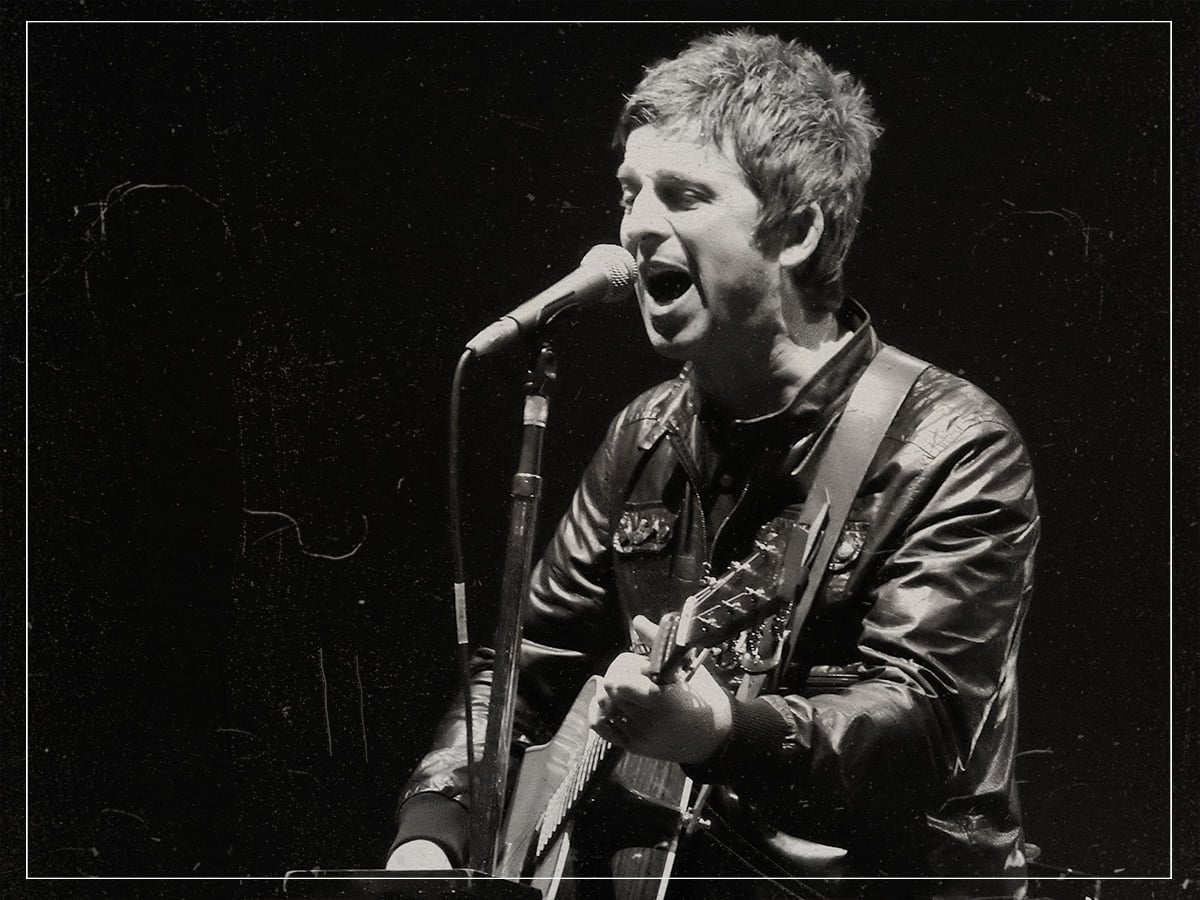
There is a version of Noel Gallagher that the public knows by heart: the man who once claimed Oasis were the greatest rock and roll band on the planet, who sneered at Blur, Radiohead and the Beach Boys with equal enthusiasm, who built his entire public persona on an unshakeable certainty that nobody in his era was operating at his level. That version of Noel is not entirely wrong. But it is not the whole picture. Because in 1996, right at the absolute peak of Oasis's powers, Gallagher sat down with Q Magazine and said something that should have made headlines and somehow never quite got its due. He admitted, plainly and without much prompting, that there were better bands than Oasis in England. Let that sit for a moment. This is the man who made arrogance into an art form, and he blinked.
The High Horse Has a Dismount
The key context here is timing. This is 1996. [Oasis at Knebworth](/uprise/culture/oasis-at-knebworth-30-years-on-the-story-of-1996) had just happened. The band were not merely popular; they were a national event, a generational touchstone, the kind of thing people would tell their grandchildren about. The confidence in the Gallagher camp had never been higher, and it probably never would be again. So for Noel to sit back in that moment and say what he said was genuinely unexpected. It was also, characteristically, complicated.
What he actually said was: "There's better bands than Oasis in England." Then, because this is Noel Gallagher and he cannot help himself, he immediately started walking it back. He listed the bands he respected, then changed "better" to "as good as", then finished by declaring that Oasis were still the biggest band in the country. The man gave himself a compliment inside a compliment wrapped in a moment of fake humility. Classic.
The Verve Get Their Flowers Early
The first name Gallagher gave was The Verve, and that one actually lands with some weight. He said, plainly, "The Verve are a better band than we are." At the time, The Verve were a cult proposition from Greater Manchester who had released two records, A Storm In Heaven and A Northern Soul, neither of which had broken them into the mainstream. 'Bittersweet Symphony' was still a year away. Gallagher was calling it before most people had caught up.
What makes this interesting is how close The Verve were to Oasis's own territory. Northern, working-class, guitar-driven, rooted in the same scene and the same streets. If Gallagher was going to feel threatened by anyone on that list, it should have been them. And yet he went first with the big compliment. Maybe it was easier to praise the band that had not yet eclipsed him. Maybe he genuinely meant it. Either way, he saw something real.
Primal Scream, Cast, Ocean Colour Scene
The rest of Gallagher's list is worth unpacking rather than breezing past. He named Primal Scream, Cast, and Ocean Colour Scene as bands operating at his level, or close to it. These are not throwaway picks. Gallagher has previously spoken about Primal Scream's 'Shoot Speed Kill Light' as one of his favourite songs of all time, putting it in the same bracket as tracks by Bob Dylan and The Beatles. That is about as high a compliment as Noel Gallagher is capable of giving.
Cast and Ocean Colour Scene are interesting choices for a different reason. Both bands were doing something important geographically. Cast were Liverpool; Ocean Colour Scene were from Birmingham. Oasis, of course, were from Manchester. Together, these acts proved that the Britpop moment was not just a London phenomenon being beamed out to the regions. It was genuinely nationwide, rooted in cities with their own sounds, their own working-class stories, their own reasons to pick up a guitar and make noise. Gallagher recognising that says more about his cultural instincts than any amount of trash talk ever could.
The Blur Problem
You cannot tell this story without mentioning the elephant in the room: Blur. Notably absent from Gallagher's list of respect. The Battle of Britpop was the defining culture war of the nineties, and [its wounds ran deeper than the headlines suggested](/uprise/culture/remembering-oasiss-historic-knebworth-shows-of-96-it-was-at). Damon Albarn once admitted that Noel's constant mockery "really, really hurt at the time," and compared Oasis to school bullies he simply had to endure. That is not banter between equals. That is one man's cruelty leaving a mark on another.
It tells you everything that when Gallagher was being generous with his praise, he simultaneously used the opportunity to take another dig at Blur. The bands he respected, he said, had not got dragged into "media bullshit bollocks" the way Blur had. Even the act of complimenting someone else became a vehicle for one more jab southward. The feud was never really about music. It was about class, geography, image and identity. And Gallagher was never going to let Blur into his circle of respect, no matter how gracious he was feeling.
The Takeaway
What this interview actually reveals is the gap between the Noel Gallagher who performed in public and the one who occasionally let his guard slip. [He has spoken since about working-class kids and the barriers they face getting into music](/uprise/culture/noel-gallagher-working-class-kids-cant-afford-to-become-rock), and there is a version of him that is considerably more thoughtful than the tabloid caricature. The Q Magazine interview is part of that picture.
The retraction at the end is the tell. He gets through the list, catches himself being too open-hearted, and hauls himself back with "we are the biggest band in the country." The armour goes back on. The moment of generosity is over. But it happened. It was real. And the fact that he said it during 1996, of all years, when he had every reason to believe his own mythology without question, makes it more interesting than anything he said at his most bombastic. Noel Gallagher knew his peers were extraordinary. He just could not quite live with saying so out loud.