
House music is one of the most globally influential art forms of the last hundred years, and it began in the dark, in a city that did not particularly want it to exist. That is not a romantic exaggeration. That is precisely what happened in Chicago, where a group of friends, pushed to the margins of mainstream culture, built something so vital and so exportable that it now fills festival stages from London to Cape Town. The story WTTW Chicago has been telling through its archive documentary work is not just music history. It is the history of who gets to have a good time, and who has to fight for the right to do it.
Where Did House Music Actually Come From?
The seed was planted by a group of Chicago friends who had encountered the warehouse party scene in New York and wanted to bring something like it back home. They were not label executives or industry figures. They were people looking for a night out that felt right, that felt safe, that felt like theirs. What they built in Chicago's underground party scene became a genuinely new genre of music. That is worth sitting with for a moment, because it does not happen very often. Genres usually evolve so gradually that you can barely identify a point of origin. House music had one.
What made those early Chicago parties distinctive was not just the sound. It was the function. The underground scene operated as a safe space for gay people and people of colour at a time when that kind of protection was not just socially useful, it was physically necessary. The music and the space were inseparable. You cannot understand what house music is, rhythmically and emotionally, without understanding that it was made by people who needed somewhere to exist freely. That need shaped every element of the culture that grew around it.
The Anti-Disco Backlash Was Not About Music
Before house music could emerge properly, something had to be driven underground first. Disco, the genre that had given Black, gay and Latino communities a cultural platform through the 1970s, became the target of a backlash that WTTW's documentary frames as rooted in racism and homophobia. The anti-disco movement presented itself as a matter of taste, as if millions of people had simply decided the music was not very good. That framing should not survive any honest scrutiny. When the people most enthusiastically destroying disco records were overwhelmingly straight and white, and the people who loved disco were overwhelmingly not, the idea that this was purely aesthetic falls apart immediately.
What the backlash actually did, though, was accelerate something. Disco went underground, and in going underground, it transformed. The Chicago scene took the energy and the function of disco and pushed it somewhere new. House music was not disco's replacement. It was disco's survival strategy, mutated under pressure into a tougher, more electronic, more skeletal form. The people who tried to kill the culture ended up inadvertently making it harder. That is one of the more satisfying ironies in modern music history. You can read the full arc of that story in [our longer piece on how Chicago built this culture and the world took the credit](/uprise/culture/the-history-of-house-music-in-chicago-full-story).
Frankie Knuckles and the Warehouse Years
DJ Frankie Knuckles is the name most closely associated with the earliest days of house music, and in a 2004 interview preserved in the WTTW archive, he spoke directly about those formative nights at the Warehouse. That interview is a document of real cultural significance, the kind of primary source that music historians will return to repeatedly. Knuckles was not just a DJ in the conventional sense. He was shaping a room, shaping a community, shaping a sound in real time. The Warehouse was not a commercial venue chasing a trend. It was the place where the trend was being invented, one night at a time.
What is striking about Knuckles's account, even at a remove, is how local and specific it all was. This was not a calculated attempt to create an international movement. It was a group of people in one city making something for themselves. The fact that it became global is a testament to how genuinely powerful the music was, and also to how universal that need for a free and safe space to move your body actually is. When house music crossed the Atlantic and arrived in the UK, it did not feel foreign to the people who received it. It felt like something they had been waiting for.
Women Had to Fight Their Way Into the Booth
One of the less comfortable aspects of house music's early history, and one that WTTW's documentary does not shy away from, is that the scene which positioned itself as a refuge from mainstream discrimination was not automatically welcoming to everyone within its own walls. Women who wanted to DJ in the early house scene found the doors closed. They had to carve out space for themselves in a culture that celebrated inclusion on one axis while practising exclusion on another.
That tension matters because it complicates the simple narrative. House music's origins in Black and queer communities are real and significant, and the exclusion of women from the DJ booth in those same spaces is also real and significant. These facts do not cancel each other out. They sit together as a reminder that marginalised communities building their own spaces does not automatically mean those spaces are free of their own hierarchies. The women who pushed through did so against resistance, and the scene is better for the fact that they did not give up.
Chicago Still Owns It
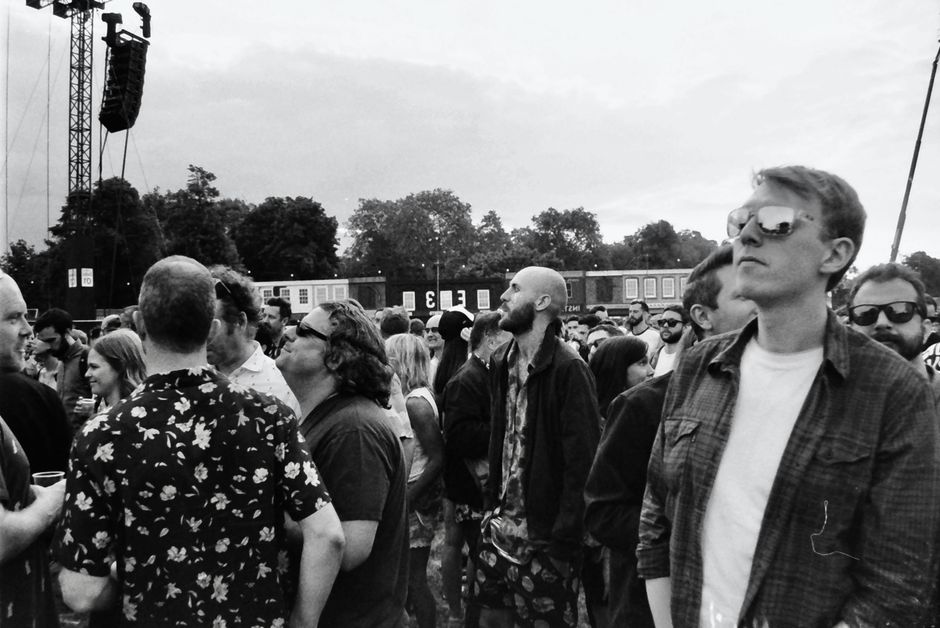
What Chicago does that no other city quite manages is celebrate house music with the proprietary confidence of a birthplace. The Chicago House Festival in Millennium Park and the Chosen Few Picnic and Festival in Jackson Park are two of the city's largest annual celebrations of the culture, events that draw thousands of people to honour a sound that began in basements and back rooms. WTTW even offers a 360-degree virtual tour of both festivals, which is the kind of archival generosity that music culture genuinely needs.
The contrast with how house music is often discussed in Europe is worth noting. The UK rave scene absorbed house music and built entire subcultures around it, from the warehouse raves of the late 1980s to the superclub era that followed. Nottingham, as Left Lion has documented, played a vital role in the 1990s dance culture explosion. The music clearly resonated far beyond its origins. But the cultural credit for the invention does not always travel with the music. Chicago made this. Chicago keeps making it. The festivals are a declaration of that fact, not just a nostalgia exercise. And the broader impact of that live culture on communities and economies is something the House of Lords Library has flagged when examining the contribution of live music in the UK context, though the American original is where the argument begins. The spirit that house music carries across borders, that sense of a room full of people who needed exactly this, is something you can hear in every genre it touched. [Madchester](/uprise/culture/what-was-madchester-the-manchester-shop) would not have happened without it. Nor would the British electronic scene that produced artists like [Adamski](/uprise/culture/adamski---wikipedia), who understood the Chicago influence even if the mainstream press barely acknowledged it.
Our Verdict
House music did not just survive the people who tried to erase its predecessors. It outlasted them, outgrew them, and ended up shaping global culture on its own terms. The story WTTW Chicago has documented is one of the more important pieces of recent American cultural history, and it deserves more than a footnote in the standard music industry narrative. This was music made by people who had been told there was no room for them, and they built the room themselves. That is what the genre carries with it, every time a DJ drops that beat anywhere in the world.