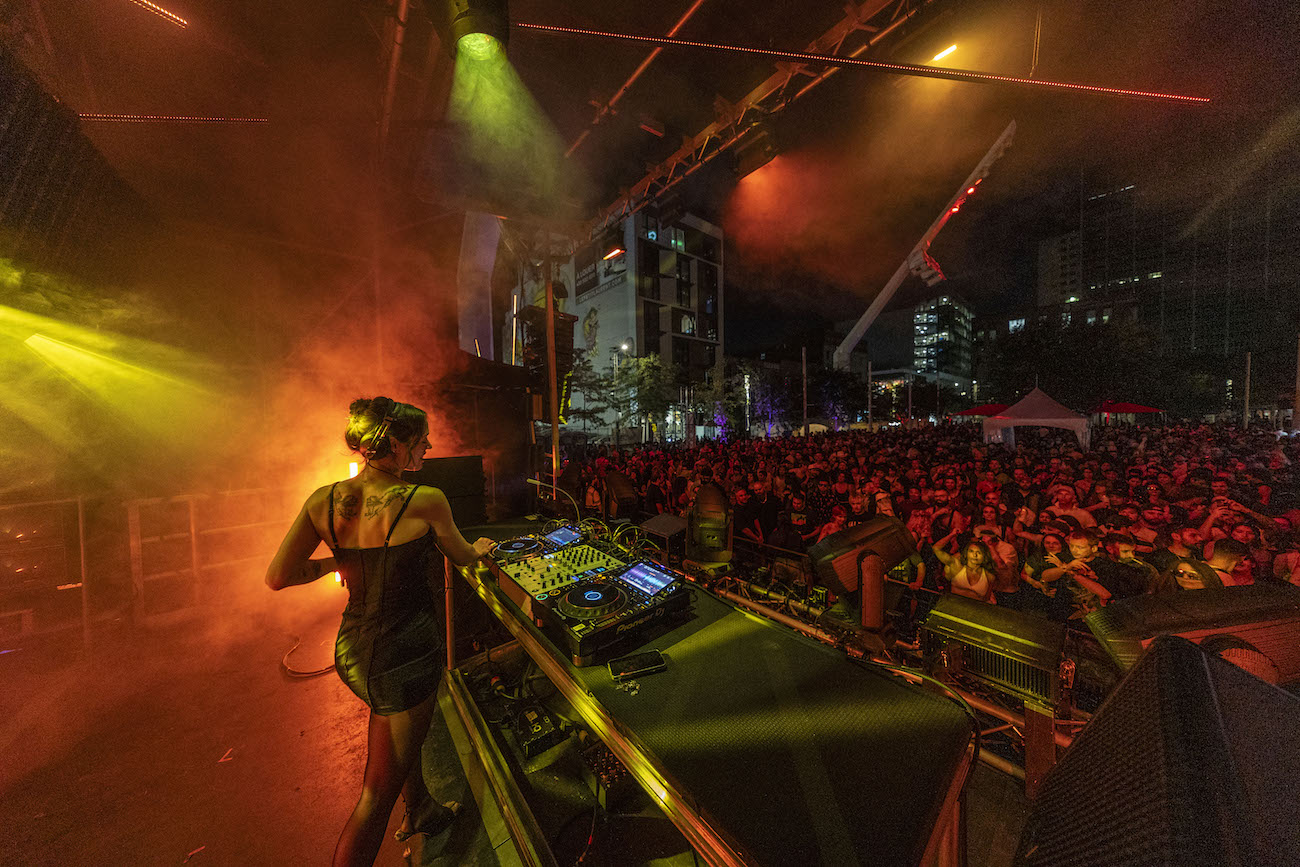
There are festivals, and then there are institutions. MUTEK is the latter, and the fact that it exists in Montréal at all is essentially an accident of parenthood. ## A PhD Scholar, A Rave, And A Decision That Changed Canadian Culture Alain Mongeau didn't set out to build a Canadian electronic music cornerstone. He was a PhD scholar who stumbled into rave culture in the 1990s, getting his head blown off by the Interference Festival at Berlin's Love Parade, by Barcelona's Sónar, and by German duo Sun Electric. The man was ready to pack his bags and move to Europe. Then life intervened, he had a child, and Canada kept him. "In theory, I should have moved to Europe because it attracted me," he's admitted. "I had a kid, so I had to stay." That's the origin story. Not a grand vision, not a business plan, just a bloke who fell in love with electronic music on the continent and had to find another way to scratch the itch. In 2000, he launched MUTEK in Montréal, built around sonic and digital creativity, and what started as one man's answer to a personal dilemma has since expanded its footprint to Barcelona, Buenos Aires, Tokyo, and well beyond. We'd argue that kind of accidental origin is exactly why it works. Nobody built MUTEK to satisfy a market gap or tick a cultural funding box. It was built out of genuine obsession, the kind that makes a festival feel like it means something rather than just filling a summer calendar slot. ## Six Nights That Justify The Flight What MUTEK offers isn't the same as your standard festival weekend. It runs across six nights, which is its own kind of commitment, both from the organisers and from anyone travelling in for it. Montréal becomes something else entirely during that stretch. The city already carries a reputation for punching well above its weight culturally, and a week inside MUTEK only deepens that impression. The festival's roots in the transatlantic electronic scene, Berlin, Barcelona, the late-90s rave world that Mongeau encountered, give it a lineage that feels earned rather than borrowed. It isn't cosplaying European club culture from a distance. It was founded by someone who was there, who understood what made those spaces vital, and who chose to build something rooted in that understanding rather than imitate the surface aesthetics. That matters. [There's a lot of music culture that gets built around image and spectacle](/uprise/music/omni-announce-deluxe-deluxe-for-its-10th-anniversary-hear-new), MUTEK has always seemed more interested in the actual sound. ## Our Take A festival born because its founder couldn't relocate to Europe and had to stay in Canada, that's either a consolation prize or the most quietly radical act of cultural transplantation of the past 25 years. Given what MUTEK has become, we know which one it is. Mongeau's accidental pivot didn't produce a pale imitation of what he'd seen abroad. It produced something with its own weight and identity, rooted in Montréal but genuinely global. If you've been sleeping on it, that's on you. The man stayed home and built something that now travels the world. The least we can do is pay attention.
Music
A Week At MUTEK Made Montreal Feel Too Good To Be True
There are festivals, and then there are institutions. MUTEK is the latter, and the fact that it exists in Montréal at all is essentially an accident of...
1 September 2026