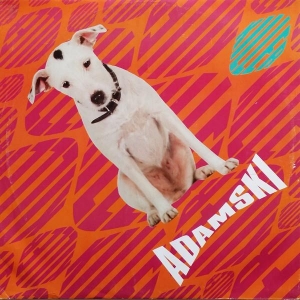
There is a version of the "Killer" story that gets told as a tidy pop fairy tale: unknown DJ meets unknown singer, magic happens, number one for four weeks. Neat, clean, ready for a VH1 special. The actual version is messier, more interesting, and far more revealing about what British music was doing at the turn of the 1990s than any retrospective documentary has ever properly acknowledged. Adam Tinley, the man who became Adamski, wrote the instrumental skeleton of one of the most distinctive UK number ones of that era in roughly fifteen minutes, using a synthesiser he still owns today, and the bassline that hooked a generation was, by his own admission, a complete accident. The world should hear that story told properly.
The Government Was Trying to Shut This Music Down
To understand what Adamski represented, you have to understand the climate he was making music in. By the late 1980s, Margaret Thatcher's government had decided that rave culture was not merely a nuisance but an active threat, and the legislative response was extraordinary in its specificity. As Bill Brewster and Frank Broughton documented in "Last Night A DJ Saved My Life", the Criminal Justice Bill actually attempted to define the music itself, describing prohibited sounds as those characterised by the emission of a succession of repetitive beats. Not drug use, not trespass, but the sound of a kick drum. The state was trying to criminalise a tempo.
This is the context in which Adamski was building his audience, playing illegal raves and underground clubs across the country. [How rave culture spread out of its original strongholds and consumed everything around it](/uprise/culture/the-spread-of-the-rave-scene-to-other-cities) is a story that tends to get told through the lens of Manchester or Sheffield, but Adamski was operating across multiple cities simultaneously, turning up at Liverpool's Underground Club, playing the Haçienda in Manchester, heading out to Ibiza. The reach was already there. The infrastructure of the scene, chaotic and contested as it was, had built him a genuine audience before a single major label got involved.
A Career That Started at Age Eleven
What makes Adamski's biography genuinely strange is that by the time "Killer" came out in March 1990, he had already been making records for over a decade. In 1979, aged eleven, he and his five-year-old brother Dominic recorded a handful of songs including "Baby Sitters" and sent them to the Fast Product label run by Bob Last, who managed the Human League. The label actually released the recordings on a compilation called "Earcom 3". John Peel played them on BBC Radio 1. Smash Hits and Melody Maker covered them. An eleven-year-old and a five-year-old were getting serious press.
That backstory matters because it reframes the "overnight success" narrative entirely. Tinley was not a kid who wandered into a rave and got lucky. He had been absorbing music making, distribution, press reception and label politics since primary school. By 1988 he was recording under the name Diskord Datkord alongside his older brother Mark and Johnny Melton of the Specimen. A year later he was contributing piano to Jimi Polo's "Better Days", a session that proved formative in an entirely different way. It was through Jimi Polo that Tinley got introduced to the legends of Chicago house, and the account he gives of watching Adonis play keyboards in his bedroom reads like someone describing a religious experience. He uses the phrase "like having Jesus or Krishna over for dinner." He is not being ironic.
The Bassline Nobody Noticed For Thirty Years
When Tinley finally sat down to create what would become "Killer", the technology in front of him was an Ensoniq SQ-80, a Roland TR-909 for the drums, and a Yamaha for the tribal percussion accents that gave the track its uneasy forward motion. The bassline, the element that defines the entire record, came out of a technical error: only the Oberheim DMX responded to the MIDI signal from the bassline, which was not what he had planned. The result was, as he put it, "dark and triumphal." He played the first version at the closing party of Amnesia in Ibiza at the end of summer 1989.
The bassline's origins get even more interesting under scrutiny. When presented with the suggestion that it bears a strong resemblance to the line in "Faces" by Italian disco act Clio from 1985, Tinley's response is a genuinely delightful moment of self-discovery. He had no knowledge of Clio at all. What he does recall being obsessed with is the bass on "Bassline" by Mantronix and on "No GDM" by Gina X, and he speculates that those influences had worked their way into his subconscious and emerged in "Killer" without him ever consciously referencing them. Influence working underground, reappearing somewhere else entirely. Nobody had pointed out the Clio connection in nearly thirty years.
How Seal Found His Way Onto the Record
The route Seal took to get onto "Killer" is the kind of story that sounds apocryphal but checks out. After a performance at the Sunrise 5000 rave in Northamptonshire, a young singer handed a demo tape to Daddy Chester, the MC who worked alongside Adamski at live shows. Chester passed it to Tinley with a strong recommendation. They eventually met at a London club called Solaris, compared notes, and the vocal arrangement emerged from that conversation. The instrumental version, the one Tinley had been playing live throughout 1989 and into 1990, and which is still visible on YouTube shot at the Underground Club in Liverpool, was quietly shelved. MCA wanted a radio-friendly version. The label got what it wanted.
Tinley's feelings about the major label route are complicated in ways that feel very familiar if you know anything about how those deals worked in that era. [The tension between underground credibility and mainstream infrastructure was not unique to Adamski](/uprise/culture/primal-scream---screamadelica-the-rock-box), but his specific set of roads not taken is striking. KLF Communications approached him before MCA did. Bill Drummond personally advised him not to sign with a major. Paul Oakenfold wanted him on Profile Records. He turned all of it down, acknowledging freely that both alternatives might have served him better creatively and spiritually, while conceding that neither might have generated the commercial momentum that "Killer" ultimately achieved.
The Day the Mix and the Protest Happened at Once
Here is a detail from the "Killer" story that almost nobody knows, and which deserves to be remembered properly. Tinley mixed the track on the same day that the Freedom To Party demonstration took place at Trafalgar Square, directly outside his studio. This was the protest against the government legislation targeting rave culture, the same legislation that had tried to define illegal music by the repetitiveness of its beats. He spent that day moving between the studio and the streets, feeding off the energy of the crowds. "Killer" and the movement against its criminalisation were, quite literally, produced in the same afternoon.
"Killer" reached number one in the UK and held it for four weeks across May and June of 1990. MCA licensed it across Europe, the United States and Japan, though inexplicably not Italy, a gap that Tinley admits he never sought an explanation for even during a later period when he lived in the country. The track became a landmark not just commercially but culturally, the point at which the energy of the rave underground punched directly through to Top of the Pops without losing its edge on the way. That rarely happens. Usually the journey softens something.
What the Accident Actually Tells Us
The temptation with a record like "Killer" is to mythologise the process, to find intention in everything and turn the whole thing into a legend. Tinley resists that at every turn. Fifteen minutes. A MIDI error. A bassline that echoed records he did not consciously remember hearing. A vocal that arrived through a chain of two people and a cassette demo at a rave in Northamptonshire. A mix completed while a protest was happening outside the window.
What the story of "Killer" actually tells us is something about how that particular moment in British music worked. [The cross-pollination of sounds, cities, and scenes that defined the turn of the 1990s](/uprise/culture/the-spread-of-the-rave-scene-to-other-cities) was not a planned cultural project. It was chaotic, contested, and constantly in danger of being shut down. The records that came out of it, the ones that genuinely lasted, tended to be the ones that carried that energy rather than packaging it. "Killer" sounds dark and triumphal because Adamski made it in a dark and triumphal moment. The accident was the whole point.